How to Become a Software Engineer in Singapore (2026 Guide)
A complete guide to becoming a software engineer in Singapore. Earn S$55k–S$220k/yr. Skills, salary breakdown, and career roadmap — free to explore.
Software engineering is one of Singapore's most in-demand tech roles. With the government's Smart Nation initiative driving digital transformation across every industry, companies are hiring software engineers at every level — from fresh graduates to senior architects. If you're considering a career switch or planning your first tech job, this guide covers everything you need to know about becoming a software engineer in Singapore.
Whether you're a polytechnic graduate, a university student, or a mid-career professional looking to switch, there's a clear path into software engineering here. The role pays well, offers strong career progression, and gives you the skills to work anywhere in the world.

What Does a Software Engineer Do in Singapore?
Software engineers design, build, and maintain the applications and systems that power everything from banking apps to e-commerce platforms. In Singapore specifically, you'll find software engineers working across fintech (DBS, GrabPay), government digital services (GovTech), e-commerce (Shopee, Lazada), and dozens of startups building products for the Southeast Asian market.
Your day-to-day work typically involves writing code, reviewing pull requests, designing system architecture, debugging issues, and collaborating with product managers and designers. Depending on your seniority, you might also mentor junior engineers, lead technical decisions, or drive the architecture of entire platforms.
Singapore's software engineers frequently work with distributed teams across the region, so strong communication skills matter just as much as your technical chops.
Software Engineer Salary in Singapore
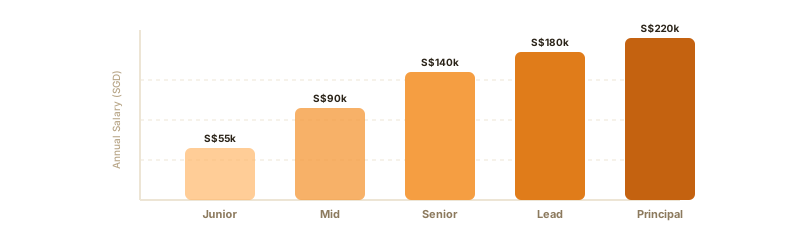
Software engineering is one of the better-paying careers in Singapore's tech sector. Here's what you can expect at each level, based on data from Talent.com Singapore:
Junior Software Engineer (0–2 years): S$55,000/year
Starting salaries for fresh graduates from NUS, NTU, or SMU computer science programmes typically land in the S$55,000–S$72,000 range. Bootcamp graduates may start slightly lower but can close the gap within 1–2 years of experience.
Mid-Level Software Engineer (2–5 years): S$90,000/year
Once you've built a solid portfolio and shipped production systems, salaries jump significantly. At this stage, you're expected to own features end-to-end and mentor junior engineers.
Senior Software Engineer (5–8 years): S$140,000/year
Senior engineers lead technical decisions, design systems for scale, and are often the go-to person for complex problems. Compensation at top companies like Google, Grab, and Sea Group can exceed this significantly with bonuses and equity.
Lead / Staff Engineer (8–12 years): S$180,000/year
At this level, you're shaping the technical direction of entire product areas. Lead roles at companies like Bytedance SG, Stripe, and Shopee regularly offer total compensation packages above S$200,000.
Principal Engineer (12+ years): S$220,000+/year
Principal engineers are rare and highly compensated. They set architectural standards across organisations and often have influence comparable to engineering directors.
The full salary range for software engineers in Singapore spans S$55,000 to S$220,000 per year, depending on experience, company, and specialisation.
Skills You Need to Become a Software Engineer in Singapore
Based on Singapore's job market and the SkillUp Software Engineer skill path, you need to master 20 core skills across four areas:
Technical fundamentals:
- Programming Fundamentals — Python, JavaScript, or Java as your primary languages
- Data Structures & Algorithms — essential for interviews and writing efficient code
- Version Control (Git) — every team uses Git; you need to be fluent
- Database Management — SQL, PostgreSQL, and understanding data modelling
- Web Development (Frontend) — React, Next.js, HTML/CSS
- Web Development (Backend) — Node.js, Express, Django, or Spring Boot
- API Design & Development — REST APIs, GraphQL, and API security
- Cloud Computing Basics — AWS, GCP, or Azure fundamentals
- Software Testing — unit tests, integration tests, and test-driven development
- DevOps & CI/CD — Docker, GitHub Actions, automated deployment pipelines
- Problem Solving — breaking down complex problems systematically
- Communication — writing clear technical documentation and explaining decisions
- Teamwork & Collaboration — code reviews, pair programming, and cross-team work
- Agile Methodologies — Scrum, Kanban, and sprint planning
- Adaptability & Continuous Learning — the tech stack changes fast; you need to keep up
- Fintech Domain Knowledge — relevant for Singapore's massive financial sector
- E-commerce Domain Knowledge — Shopee, Lazada, and regional platforms
- AI & Machine Learning Basics — increasingly expected even for non-ML roles
- Cybersecurity Fundamentals — secure coding practices and OWASP awareness
- Blockchain Technology — growing niche in Singapore's Web3 scene
How to Become a Software Engineer in Singapore (Step-by-Step)
There are two main paths into software engineering in Singapore. Both are valid, and companies increasingly care more about what you can build than where you studied.
Path 1: University degree
A Computer Science degree from NUS, NTU, SMU, SIT, or SUTD remains the most common entry point. NUS School of Computing and NTU's College of Computing and Data Science are particularly well-regarded. These programmes give you a strong foundation in algorithms, systems, and software design — plus access to internship pipelines at top companies.
If you're already at university studying something else, consider a double degree or minor in CS. SMU's Information Systems programme is another strong option that blends business and technology.
Path 2: Bootcamp or self-taught
If a four-year degree isn't practical, coding bootcamps like General Assembly, Le Wagon, or Rocket Academy offer intensive 3–6 month programmes that prepare you for junior roles. Many are eligible for SkillsFuture credit — you can use your S$500+ SkillsFuture credit to offset course fees.
The self-taught path works too, but requires more discipline. Focus on building real projects, contributing to open source, and creating a strong GitHub portfolio.
Regardless of your path, here's the step-by-step:
- Learn the fundamentals — Pick one language (Python or JavaScript), learn data structures and algorithms, and build basic projects
- Build a portfolio — Create 3–5 projects that solve real problems. Deploy them. A working app beats a degree on your resume
- Learn Git and collaboration tools — Every software team uses Git. Get comfortable with branches, pull requests, and code reviews
- Study system design basics — Understand how web applications are structured: frontend, backend, databases, APIs, and deployment
- Apply for internships or junior roles — Target companies like GovTech, Carousell, or Shopback that have strong engineering cultures and are open to junior talent
- Prepare for technical interviews — Practice on LeetCode, understand common patterns, and be ready to explain your thinking process
- Keep learning on the job — The first year is a steep learning curve. Ask questions, read code, and seek feedback
Top Companies Hiring Software Engineers in Singapore
Singapore is a regional tech hub, which means you have access to both local startups and global tech giants. Here are the top employers:
Singapore-headquartered:
- Grab — Southeast Asia's super-app, one of the largest engineering teams in the region
- Sea Group / Shopee — E-commerce and gaming giant with massive scale challenges
- GovTech — Singapore's government technology agency, building Smart Nation infrastructure
- DBS — Asia's leading bank, heavily investing in digital transformation
- Carousell — One of Singapore's most successful startups
- Shopback — Fintech/rewards platform with a strong engineering culture
- Singtel — Telecom giant with growing digital and cybersecurity divisions
- Google — Engineering office at Mapletree Business City
- Meta — Regional engineering hub
- Bytedance — TikTok's parent company, rapidly growing SG team
- Stripe — Fintech infrastructure, APAC hub in Singapore
- Amazon / AWS — Cloud services and e-commerce
Frequently Asked Questions
How long does it take to become a Software Engineer in Singapore?
With a university degree, you're job-ready in 3–4 years. Through a bootcamp, you can land a junior role in 4–6 months of intensive study. Self-taught developers typically need 6–12 months of consistent learning and project building before they're competitive for entry-level positions.
Do I need a Computer Science degree to become a Software Engineer in Singapore?
No. While a CS degree helps, many successful software engineers in Singapore come from bootcamps, polytechnics, or are self-taught. What matters most is your ability to build working software, solve problems, and demonstrate your skills through a portfolio.
What is the starting salary for a Software Engineer in Singapore?
Fresh graduates typically start at S$55,000–S$72,000 per year, depending on the company. Top-tier companies like Google, Grab, and Bytedance may offer higher starting packages, especially with signing bonuses and equity.
Is Software Engineering a good career in Singapore?
Yes. Software engineering offers strong salaries (S$55k–S$220k range), high demand driven by Smart Nation initiatives, clear career progression, and the flexibility to work across any industry. It's consistently ranked among the most in-demand roles in Singapore's tech sector.
How do I prepare for a Software Engineering interview in Singapore?
Focus on three areas: data structures and algorithms (practice on LeetCode), system design (understand how to build scalable web applications), and behavioural questions (prepare examples of teamwork, problem-solving, and conflict resolution using the STAR method).
Ready to apply for software engineer roles?
Run your resume through our free checker to see how it performs for Singapore employers.
Check my resume →Ready to start your journey?
Explore the interactive skill tree with all the skills mapped out — from beginner to expert.
Explore the full skill path →